14/07/2026
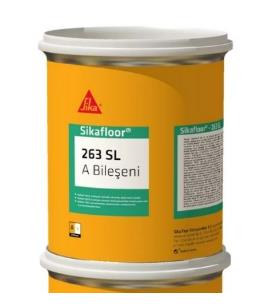
Sikafloor®-263 SL is a two-component, epoxy resin-based, self-leveling floor coating system. Thanks to its high filling capacity, it creates smooth, homogeneous, and durable surfaces even on large areas.
The product contains 100% solid epoxy content according to the “Deutsche Bauchemie” test method and provides long-lasting performance in industrial flooring applications with its excellent mechanical and chemical resistance.
✔ Self-leveling formulation provides smooth and uniform surfaces ✔ High mechanical and chemical resistance ✔ Creates a liquid-impermeable flooring layer ✔ Provides an aesthetic glossy surface finish ✔ Anti-slip surfaces can be achieved by broadcasting sand ✔ Fast and easy application on large areas ✔ Long-lasting and durable epoxy flooring solution
Sikafloor®-263 SL is an epoxy flooring system widely used in industrial areas exposed to medium and heavy loads.
Main application areas:
Product Type: Two-component epoxy resin flooring system
Mixing Ratio: A:B = 79:21 (by weight)
Pot Life: 15–60 minutes (depending on ambient temperature)
Application Temperature: +10°C to +30°C
Maximum Relative Humidity: 80%
Maximum Substrate Moisture Content: 4%
Its self-leveling structure allows the creation of seamless, flat, and visually appealing flooring surfaces, especially in large industrial areas.
The epoxy-based formulation provides excellent resistance against abrasion, impact, and heavy traffic loads.
Sikafloor®-263 SL offers strong protection against many chemicals, making it suitable for industrial environments.
The seamless coating structure prevents dirt accumulation and provides easy cleaning, making it suitable for areas requiring high hygiene standards.
By broadcasting sand or using suitable application techniques, slip-resistant surfaces can be created for areas requiring additional safety.
Durability, hygiene, and surface quality are critical factors in epoxy flooring systems.
Sikafloor®-263 SL provides a reliable flooring solution with:
It is an ideal choice for industrial facilities, warehouses, parking areas, and production environments where strong and durable flooring performance is required.
Sikafloor®-263 SL is a two-component, epoxy resin-based, self-leveling floor coating system designed for industrial floors exposed to medium and heavy loads.
It is commonly used in warehouses, production facilities, maintenance workshops, garages, loading ramps, parking areas, hangars, and wet processing areas in the food industry.
Yes. A slip-resistant finish can be obtained by broadcasting sand or applying suitable surface treatment methods.
Depending on environmental conditions, the surface can generally be walked on after approximately 24 hours at +20°C. Full curing takes around 7 days.
Yes. Sikafloor®-263 SL is available in various color options. However, slight color variations may occur in areas exposed to prolonged direct sunlight.